


Stacia K. from Encinitas, California
Purchased Why Cant I Be Rich Instead Of Good Looking Tank Top.


Drinking games change the pace of a party fast. A relaxed room turns tense when rules are unclear, one person pushes harder than the group wants, or the game becomes more about pressure than shared fun.
A good party keeps choice, timing, food, water, and transport in view. In the United States, a standard drink contains 0.6 fluid ounces or 14 grams of pure alcohol, so “one drink” is not the same across beer, wine, mixed drinks, and shots.
The mood usually drops before anyone notices a serious problem. Poor game choice, confusing instructions, and mismatched group size create awkward starts that affect the rest of the night.
Unclear rules slow the room down and make people argue over small details. A game works better when everyone knows the turn order, what counts as a mistake, when a round ends, and what nonalcoholic choice replaces a drink. Confusion turns playful tension into repeated correction.
Rule problems show up in small signals before the party stalls:
These signs matter because a social game needs rhythm. When the room spends more time debating than laughing, the activity stops helping the party and starts managing it.
A game built for four people becomes messy with twelve. A game that needs quick turns loses energy when half the room waits too long. Large groups also create side conversations, missed rules, and uneven attention.
Small groups need games with conversation and simple rounds. Bigger parties work better with short turns, visible scoring, and easy entry for late guests. The host should match the game to the room instead of forcing a format that leaves people outside the action.
Bad pacing is one of the fastest ways to ruin the night. Rounds that move too quickly encourage people to drink more than they planned. Rounds that drag for too long make the party feel stuck around one activity.
NIAAA defines binge drinking around a blood alcohol concentration of 0.08%, which commonly equals four drinks for women or five drinks for men in about two hours. Party pacing should avoid pushing the group toward that pattern.
The worst drinking game mistake is treating refusal as a problem. A person who chooses water, soda, mocktails, or no drink at all should stay part of the game without explanation. Alcohol-free options keep the group open and prevent the party from turning into a test of tolerance.
Respectful conversation also matters when people meet new guests or talk about dating, travel, or online platforms for dating Serbian mail-order brides for international marriage, because jokes about culture, gender, or relationships can make the room uncomfortable fast. A party feels better when the game supports connection instead of turning personal details into pressure.
The second half of a party needs more structure, not less. Food timing, hydration, transport plans, house rules, and safer exit options all affect whether a game stays light or creates problems.
Food and water do not make heavy drinking safe, but they support better party pacing. Food slows the rush from repeated drinks, and water gives people a break between rounds. A game that ignores both pushes the room toward fatigue, headaches, and poor decisions.
A party setup works better when practical items are already visible:
These details add structure without stopping the fun. Guests make better choices when water, food, and alternatives are normal parts of the table rather than awkward exceptions.
Transport should be settled before the game starts. A designated driver, rideshare plan, taxi number, public transit route, or overnight option gives the group a clear way home. Waiting until the end creates pressure, especially when people feel tired or embarrassed.
Driving after drinking should not be part of the decision set. The host can keep keys, rideshare links, chargers, and spare bedding ready without making the night feel heavy. A safe ride plan protects the whole party.
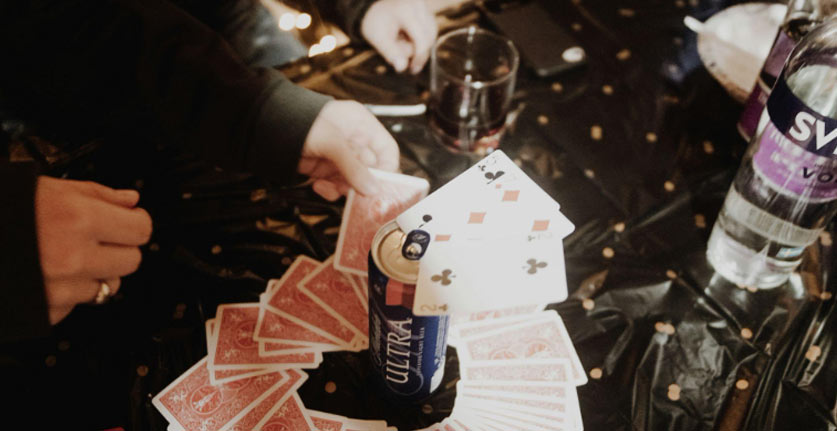
Drinking games do not have to kill the mood. The safest version is social, clear, optional, and easy to leave without drama. Rules, pacing, food, water, transport, and boundaries matter more than clever penalties.
A party stays enjoyable when nobody has to prove anything. A game works best when water, food, ride plans, and easy exits stay part of the night while guests laugh and talk together.
You must be of legal age and in no violation of local or federal laws while viewing this material.
We do not support misuse of alcohol, including excessive consumption, binge drinking, or drinking and driving. It has been proven that excessive drinking can cause serious physical harm.
Please drink responsibly!
An error occurred while trying to submit the form - we'll do our best to fix it ASAP.
My bad =(

Stacia K. from Encinitas, California
Purchased Why Cant I Be Rich Instead Of Good Looking Tank Top.
 Verified by Provely